What Is an EPK for DJs, and Do You Actually Need One?
Echobeat Team

If you've been in the scene for any amount of time, you've probably heard someone mention an EPK. Electronic press kit. Some DJs have one. Most don't. And a lot of the ones who do have something thrown together quickly — a PDF, a Google Doc, a folder of photos.
So what is it actually supposed to be, and does it make a real difference?
What an EPK is
An electronic press kit is a page — or a document — that gives anyone interested in booking you everything they need in one place. Bio. Music. Photos. Press coverage if you have it. Event history. Contact or booking form.
It's not a CV. It's not a portfolio in the traditional sense. It's closer to a dossier a promoter can open and, within a minute, understand who you are, what you sound like, and how to reach you.
Why it matters more than most DJs think
Promoters are often fielding a lot of names at once. When they're putting together a lineup, they're not doing deep research on every artist. They're making fast decisions with whatever information is in front of them.
If finding out who you are requires opening four tabs, sending a DM, and waiting two days for a reply — a lot of promoters will just move on. Not because you’re not good enough. Because the next name on the list was easier to evaluate.
A clean, complete EPK removes that friction. It doesn't guarantee a booking. But it makes sure your chances aren't being cut short by something avoidable.
What a DJ EPK should include
The basics: a short bio written in third person, links to your mixes or tracks, a few good photos, and a way to contact you or submit a booking request. If you have press coverage, reviews, or notable past gigs, those belong there too.
The more complete it is, the less back-and-forth is needed before a promoter can make a decision.
How most DJs handle this today
Usually a Linktree with their SoundCloud, Instagram, and an email address. Which works, technically — but it sends a promoter to five different places instead of giving them one place that has everything.
Some DJs build a full website. That works well but takes time and money to do properly.
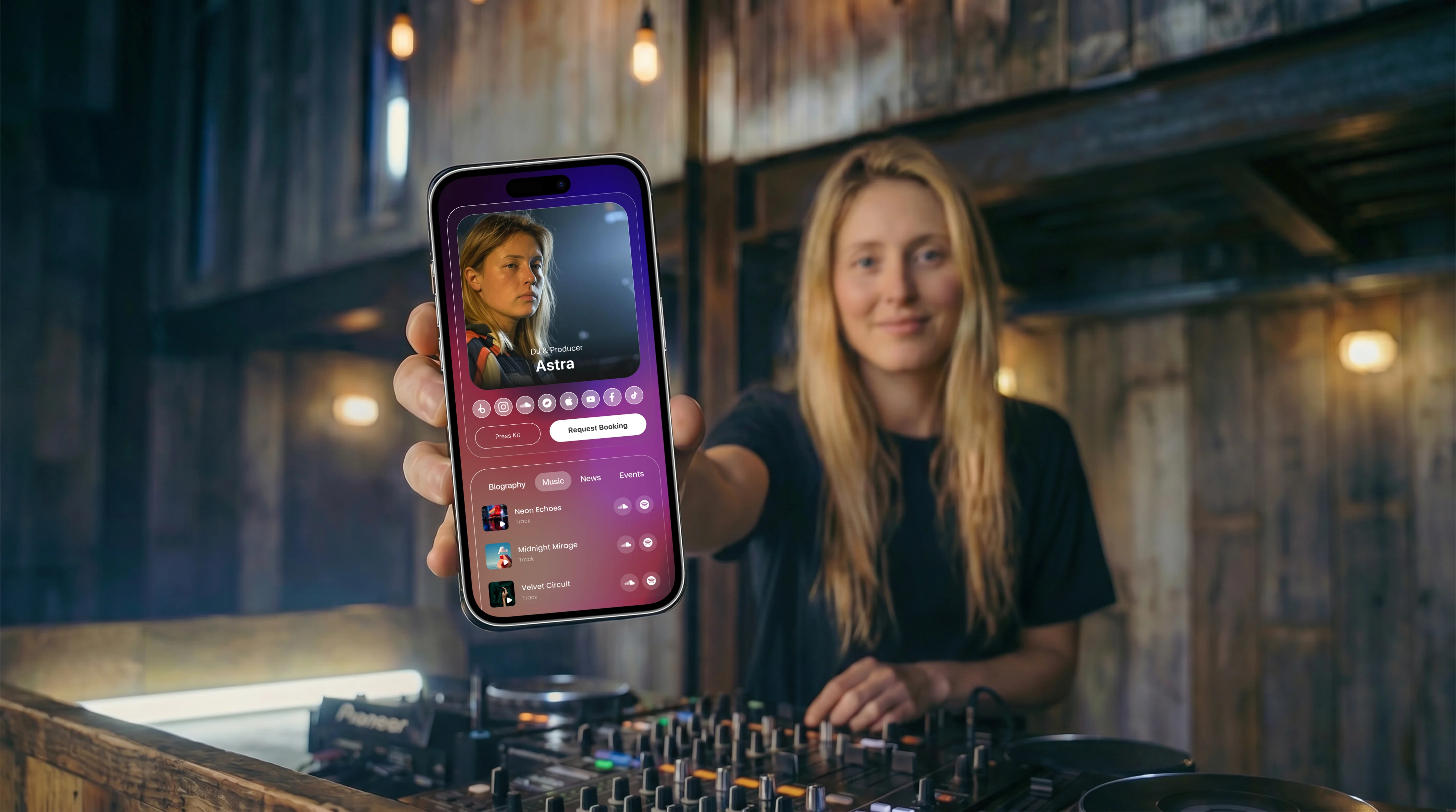
Echo Profile is what Echobeat built to sit between those two options. It's a purpose-built EPK page for DJs — you fill in your details, add your links and music, and you get a single shareable URL that covers everything a promoter needs. Including a booking request form, so inbound interest doesn't get lost in your DMs.
It's not the only way to solve this. But if you're a DJ who doesn't have a proper EPK yet, it's probably the most straightforward one.